|
Distribution |
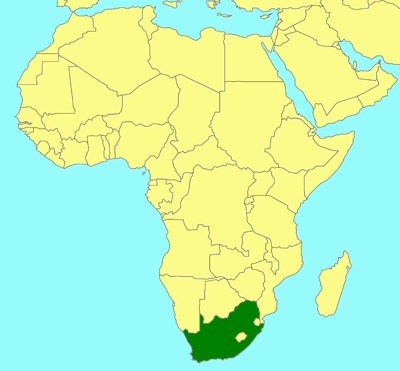
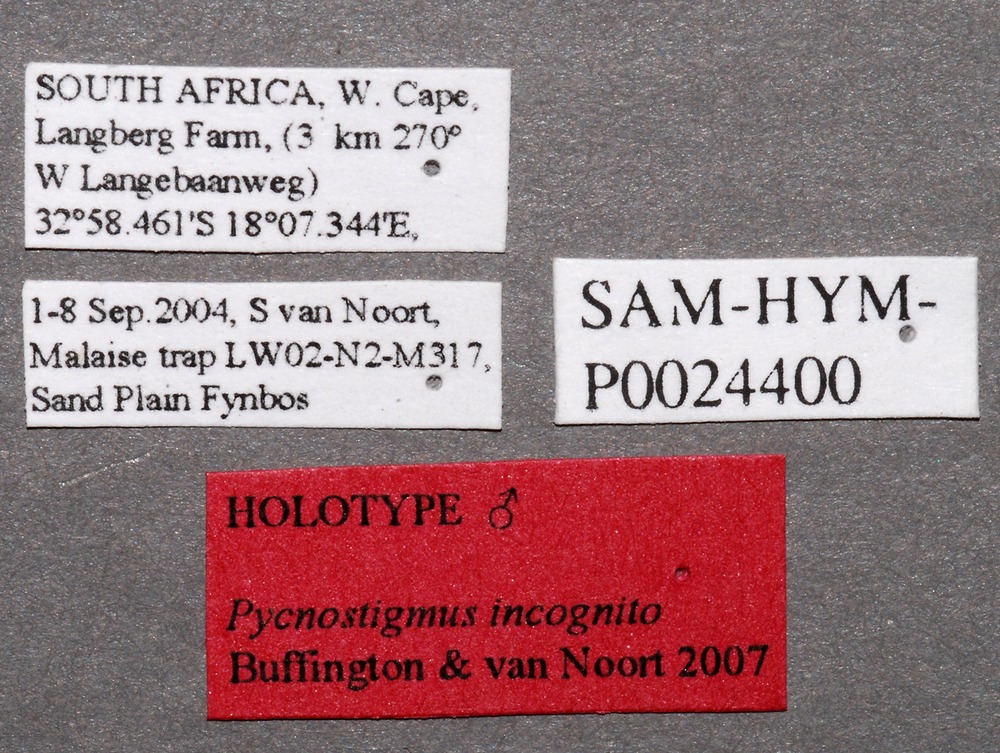
South Africa: Western Cape Province:
Langberg Farm; Koeberg Nature Reserve |
|
Biology |
Unknown |
|
Diagnosis |
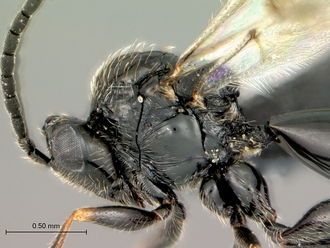
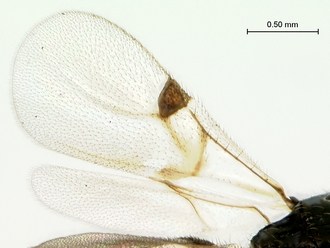
Separated
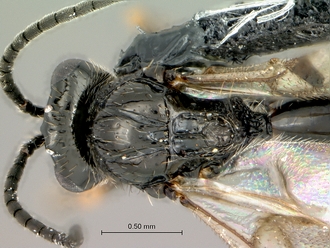
from P. mastersonae by head and mesosoma being non-metallic;
separated from P. fossilensis by having disk of scutellum
weakly carinate (center smooth in P. fossilensis); separated
from P. rostratus and P. hoerikwaggoensis by having
mesopleuron almost entirely smooth (striate in P. rostratus and
P. hoerikwaggoensis). |
|
Etymology |
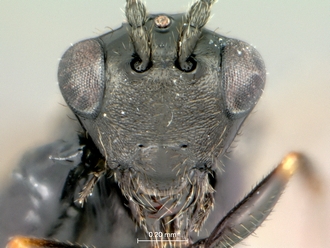
Name refers to the
mask-like shagreened surface sculpturing on frons and clypeal region. |
|
References |
Buffington,
M.L. & van Noort, S. 2007. A
world revision of Pycnostigminae (Cynipoidea: Figitidae) with descriptions of
seven new species. Zootaxa 1392: 1-30 |
Credits
|
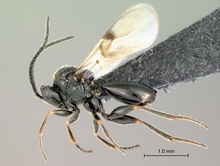
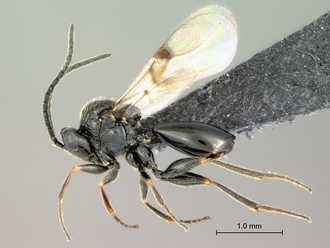
Photographs
and map illustration © Simon van Noort (Iziko Museums of South Africa), first published in
Zootaxa 1392
Matt Buffington (Systematic Entomology Laboratory, USDA/ARS) and Mattias Forshage (Swedish Museum of Natural History) both played an integral role in the development of the Cynipoidea pages.
|
|
|
Next genus:
Trjapitziniola
Next species: Pycnostigmus
mastersonae |